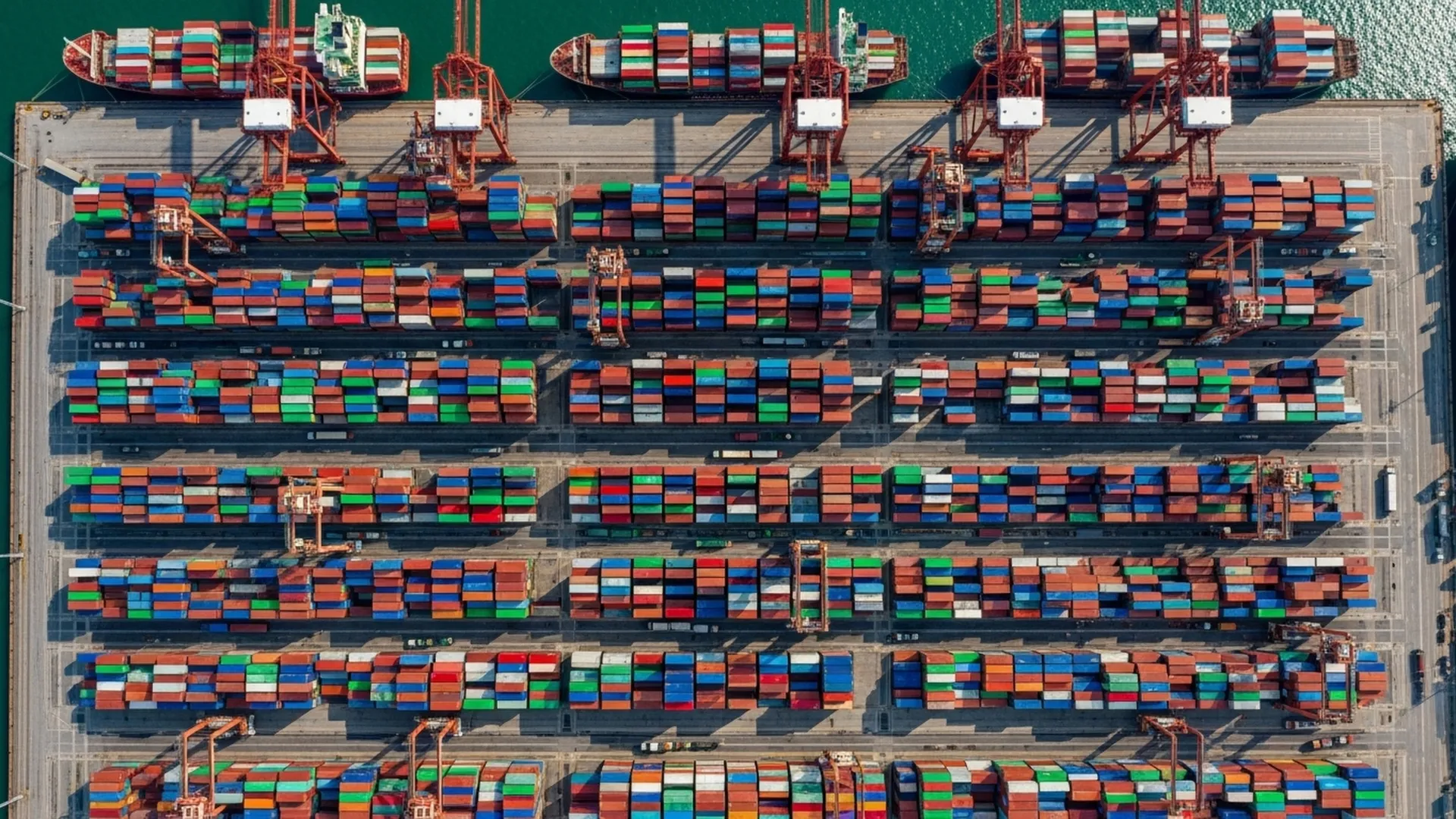
Incoterms define who pays for what and who assumes risk at each point in an international trade operation. If you import from China, India, or Vietnam, understanding these terms is fundamental to negotiating correctly with your supplier and avoiding costly surprises.
What are Incoterms?
Incoterms (International Commercial Terms) are rules published by the International Chamber of Commerce (ICC). The current version is Incoterms 2020, published on January 1, 2020 (ninth edition; the first was in 1936).
Incoterms establish three fundamental things:
- Who pays for each cost (transport, insurance, customs clearance)
- Where risk transfers from the seller to the buyer
- Who handles each process (export, import, transport)
Incoterms do not establish the price of the goods, payment terms, or transfer of ownership. Those are defined in the sales contract.
The most used Incoterms in China-Mexico trade
EXW — Ex Works
What it means: The seller makes the goods available at their factory or warehouse. Period. They don’t load them, don’t clear them for export, and don’t coordinate any transport.
The buyer is responsible for: Absolutely everything — loading the goods, inland transport in China, Chinese export clearance, international freight, insurance, import clearance in Mexico, taxes, and transport to final destination.
When does it make sense? Almost never for imports from Asia. The buyer (a Mexican company) would have to manage export clearance in China, which is impractical. If your supplier offers EXW, it means you or your freight agent must handle everything from the factory door.
Recommendation: Avoid EXW unless you have an experienced logistics agent in China who manages the entire process from the factory.
FOB — Free On Board
What it means: The seller delivers the goods on board the vessel at the port of origin (for example, Shanghai). The seller handles inland transport in China and export clearance.
Risk transfers: When the goods are on board the vessel.
The buyer pays: International ocean freight, insurance, import clearance in Mexico, tariffs, VAT, and inland transport.
It’s the most used term in China-Mexico trade because it offers a reasonable balance: the supplier handles everything in China, and the buyer controls the international freight and insurance.
Technical note: The ICC states that FOB was designed for non-containerized bulk cargo (oil, grain). For containers, the ICC recommends using FCA instead (more on this below). However, FOB remains the dominant term in practice for trade with China, largely because letters of credit traditionally reference it.
CIF — Cost, Insurance, and Freight
What it means: The seller pays ocean freight to the destination port (for example, Manzanillo) and arranges minimum insurance.
Critical point: Although the seller pays freight and insurance, risk transfers to the buyer at the port of origin, when the goods board the vessel — just like FOB.
This creates frequent confusion: many importers believe that with CIF the supplier assumes risk throughout the entire journey. That’s not the case. If the goods are damaged in transit, it’s the buyer’s problem (even though they have insurance arranged by the seller).
The minimum insurance in CIF is 110% of the contract value under the Institute Cargo Clauses (C), which is the most basic coverage. If you need broader coverage, you must negotiate it explicitly.
When is CIF convenient? When you prefer the supplier to coordinate freight and insurance (less management for you), but understand that risk is yours from the port of origin.
FCA — Free Carrier
What it means: The seller delivers the goods to the carrier designated by the buyer at an agreed location (can be the factory or the port terminal).
Why it matters: The ICC recommends FCA instead of FOB for containerized cargo. The reason is practical: containers typically spend days at the terminal before being loaded onto the vessel. If damage occurs during that waiting period, with FOB it’s unclear who assumes the risk. With FCA, risk transfers at the exact point of delivery (for example, when the container is delivered to the terminal).
Incoterms 2020 update: FCA now allows the buyer to instruct the carrier to issue an on-board Bill of Lading to the seller, which facilitates its use with letters of credit.
DDP — Delivered Duty Paid
What it means: The seller assumes all costs and risks to the delivery point in the destination country, including import clearance, tariffs, VAT, and inland transport.
Maximum obligation for the seller. In theory, the buyer only receives the goods at their door.
Does it work for China-Mexico? Generally not. The Chinese supplier would have to hire a Mexican customs broker, pay IGI, VAT, and DTA, and manage inland logistics in Mexico. Most Chinese suppliers are not prepared for this. When they offer DDP, they frequently estimate tariffs inaccurately, which creates problems.
Recommendation: Only accept DDP if the supplier has proven experience importing to Mexico and you can verify that their customs cost estimates are correct.
Comparative summary
| Incoterm | Seller’s risk up to | Seller pays | Recommended for China-Mexico |
|---|---|---|---|
| EXW | Factory door | Nothing after factory | Not recommended |
| FOB | Vessel at port of origin | Inland transport + export in China | Yes — the most common |
| FCA | Agreed delivery point | Transport to delivery point | Yes — recommended by ICC for containers |
| CIF | Vessel at port of origin | Freight + minimum insurance | Yes, if you understand risk is yours in transit |
| DDP | Final destination in Mexico | Everything, including import and tariffs | Only with experienced suppliers |
Common mistakes with Incoterms
Believing CIF covers everything. Risk is still the buyer’s from the port of origin. The included insurance is minimal.
Not specifying the exact location. “FOB China” is not enough. You must specify the port: “FOB Shanghai” or “FOB Shenzhen.” This avoids ambiguities about inland transport costs in China.
Confusing Incoterms with payment terms. Incoterms define logistics and risk. Payment terms (30% deposit, 70% against BL, etc.) are negotiated separately.
Using DDP without verifying. If your supplier offers DDP and the price seems too good, they’re likely not calculating Mexican tariffs correctly.
Conclusion
For most imports from China to Mexico, FOB or FCA are the most practical options. They give you control over international freight and insurance while the supplier handles everything in their country. CIF is convenient if you prefer less logistics management, but make sure you understand that transit risk is yours.
The most important thing: define the Incoterm before closing the negotiation and make sure both parties understand exactly what’s included and what’s not.
Have questions about which Incoterm to use in your next operation? Contact us and we’ll guide you.